


About Us
Since 2011, we’ve combined formal education in psychology, veterinary care, and canine cognition to provide exceptional dog training.
Dedicated to the humane and ethical treatment of our best friends, we rely on the latest research, while ensuring that our work is rooted in 15,000 years of human-dog connection.
Dogs and humans have evolved together for 20,000 years. They have found food for us, and protected our families and livestock. They have gone to war with us and acted as gentle playmates for our children. They have laid down their lives to save us.
Our lifestyles have changed a lot in the last century, but our need for dogs hasn't. A dog and their owner, when reunited, sync their heart rates within minutes. Just owning a dog decreases heart attack mortality by 30%.
We are designed to live with dogs, but we need to learn how to incorporate them into our chaotic modern lives.
We're here to help you and your dog learn how to live together in these modern times.
Forget sit and stay!
At Wag The Dog we can teach dogs to:
Find our phones and keys when we lose them.
Find our children when we lose them!
Put recycling in the blue bin.
Fetch their own leash for walks.
Close doors and cupboards.
Imitate our actions.
Communicate their needs and thoughts clearly.
Recognize fragile people like children and the elderly and be cautious around them.
Accompany us on outings and errands.
Trust us to return home to them when we go out.
Understand simple phrases and two step instructions.
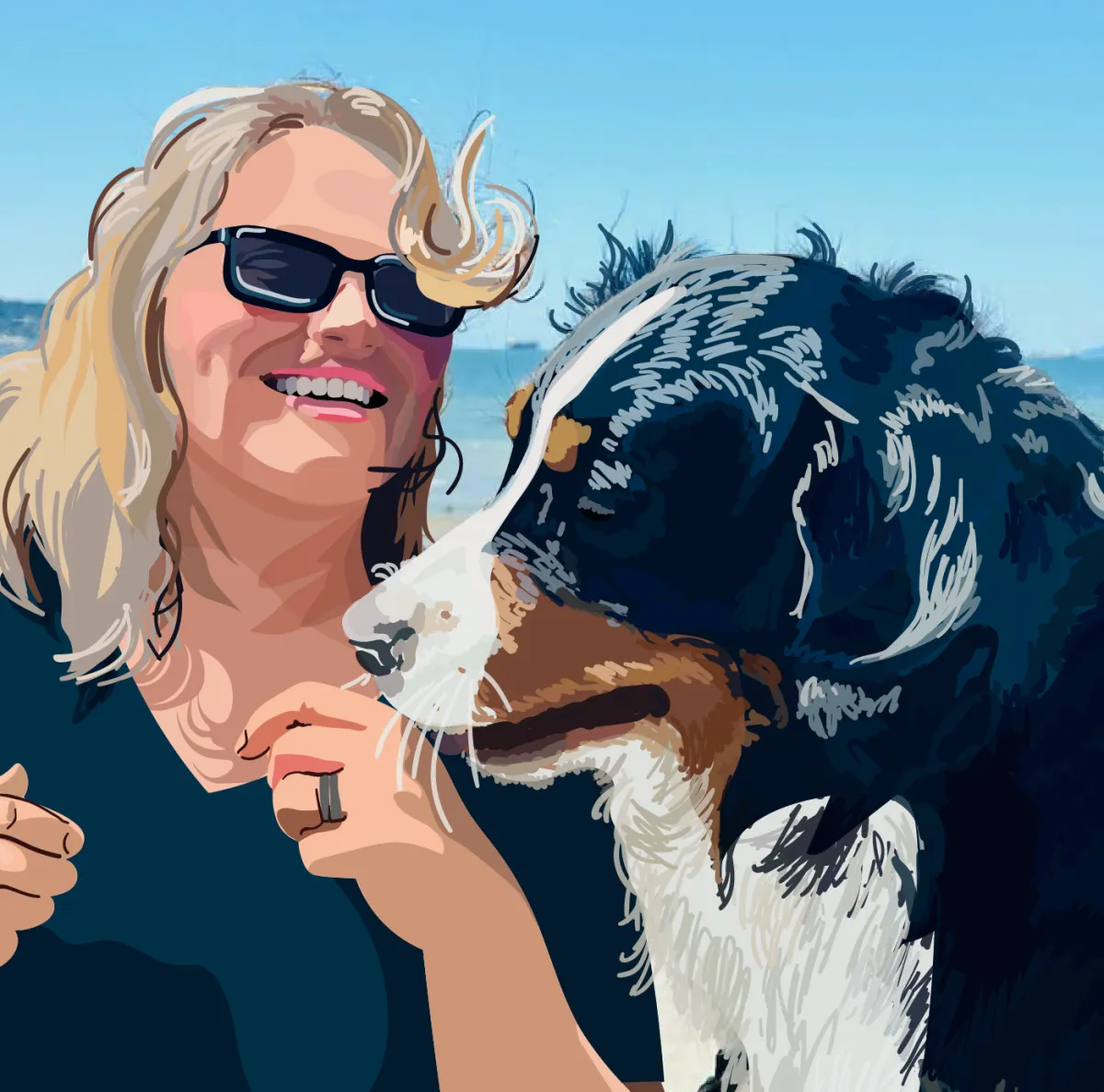
Carol Millman (she/her)
- Lower Mainland
B.Sc, Psychology, Veterinary Technologist, Certified Pet Dog Trainer - Knowledge Assessed (2022), Certified Trick Dog Instructor
Carol lives in Port Coquitlam and works in the Lower Mainland. Her autism gives her a unique perspective which she brings to her work with both dogs and people. Her time working as a veterinary nurse culminated in becoming the Director of Medical Services at a holistic veterinary clinic.
In 2008, Carol was hired as an apprentice Advanced Instructor at Pacific Assistance Dogs Society (PADS). She trained and placed wheelchair assistance dogs, hearing dogs for the Deaf, and facility therapy dogs. She also ran puppy classes and assisted in the daily care of the dogs in training.
Carol is now the Director of Training at Heeling Assistants Canada, and still helps pet dogs through Wag The Dog.
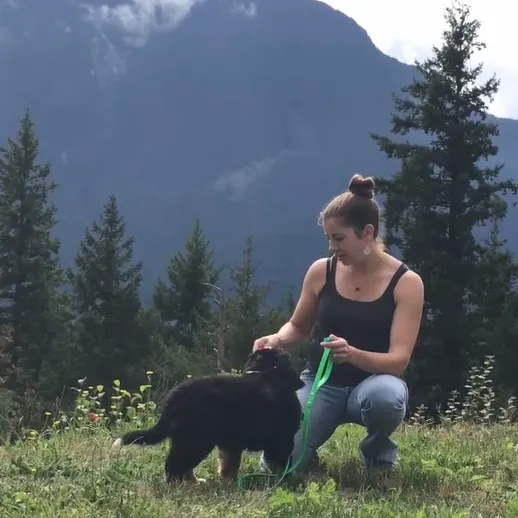
- Currently On Leave -
Amelia Kellum (she/her) - Fraser Valley
B.Sc Canine Studies, Certified Professional Dog Trainer Knowledge/Skills Assessed (2022), Certified Trick Dog Instructor.
Amelia is a certified professional dog trainer with nearly two decades of experience training dogs - including hunting, acting, and assistance dogs such as hearing, therapy, guide, and mobility dogs.
Amelia has learned directly from Bonnie Bergin, pioneer of the disability assistance dog, and is also a graduate of the Ben Kersen and the Wonderdogs professional trainer's program.
She apprenticed at PADS as an instructor and has been training independently since 2010. She now lives in Hope with her family.
What can you achieve
with our help?
Come check out our blog!
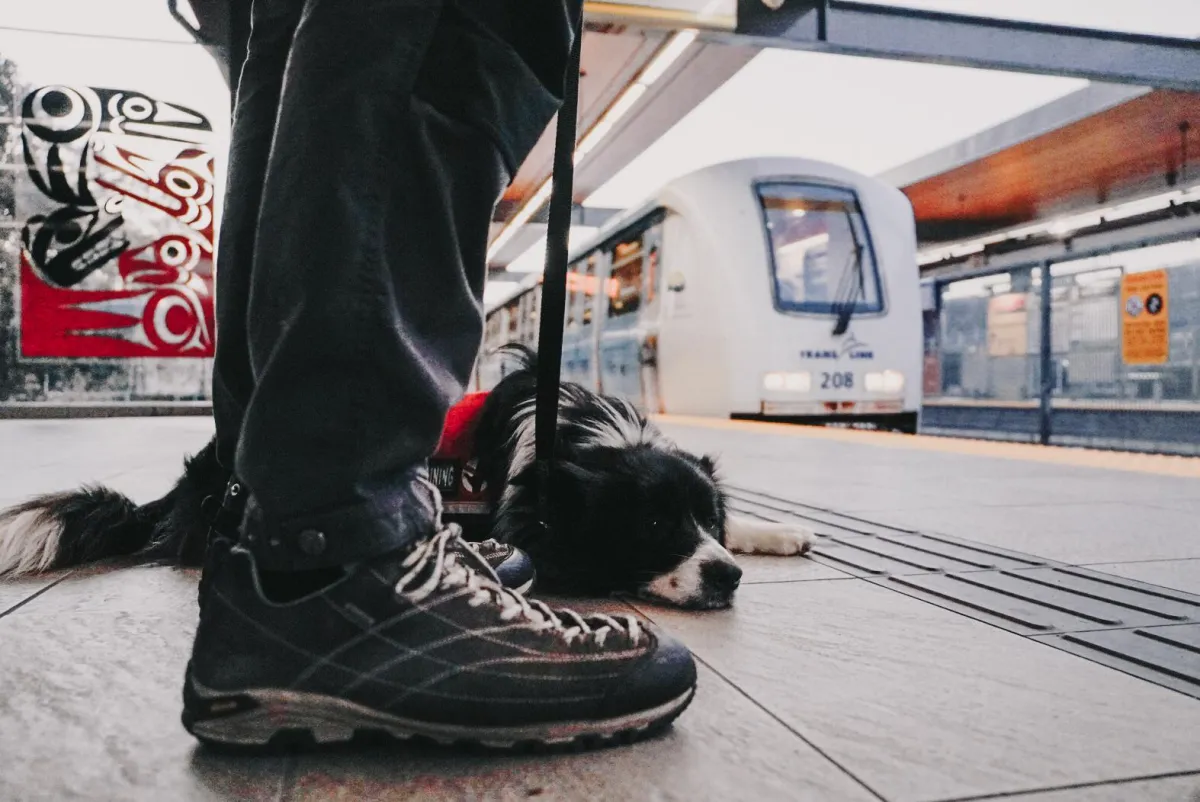
Dog Training... or Railroading?
Carol Millman B.Sc, CPDT-KA, CTDI
December 9, 2021
Lately I've been thinking about the word "training".
We usually use "training" to refer to teaching employees how to work, and teaching dogs how to behave.
Where did this word come from? How does it differ from a word like "teaching" or "education?"
I looked it up, and it seems that "to train" comes from an Old French verb which meant "to drag, pull or draw behind."
But... I'm always trying to train (there's that word again) my clients out of doing just that.
I don't want dogs to be dragged or pulled, and I'm trying to train the dogs not to drag or pull me!
Originally a train was like the train of a wedding dress - a long flowing piece of material that dragged behind you.
You can see how the word "train" came to be used for locomotives, when you think about that. The engine drags the train cars along, after all.
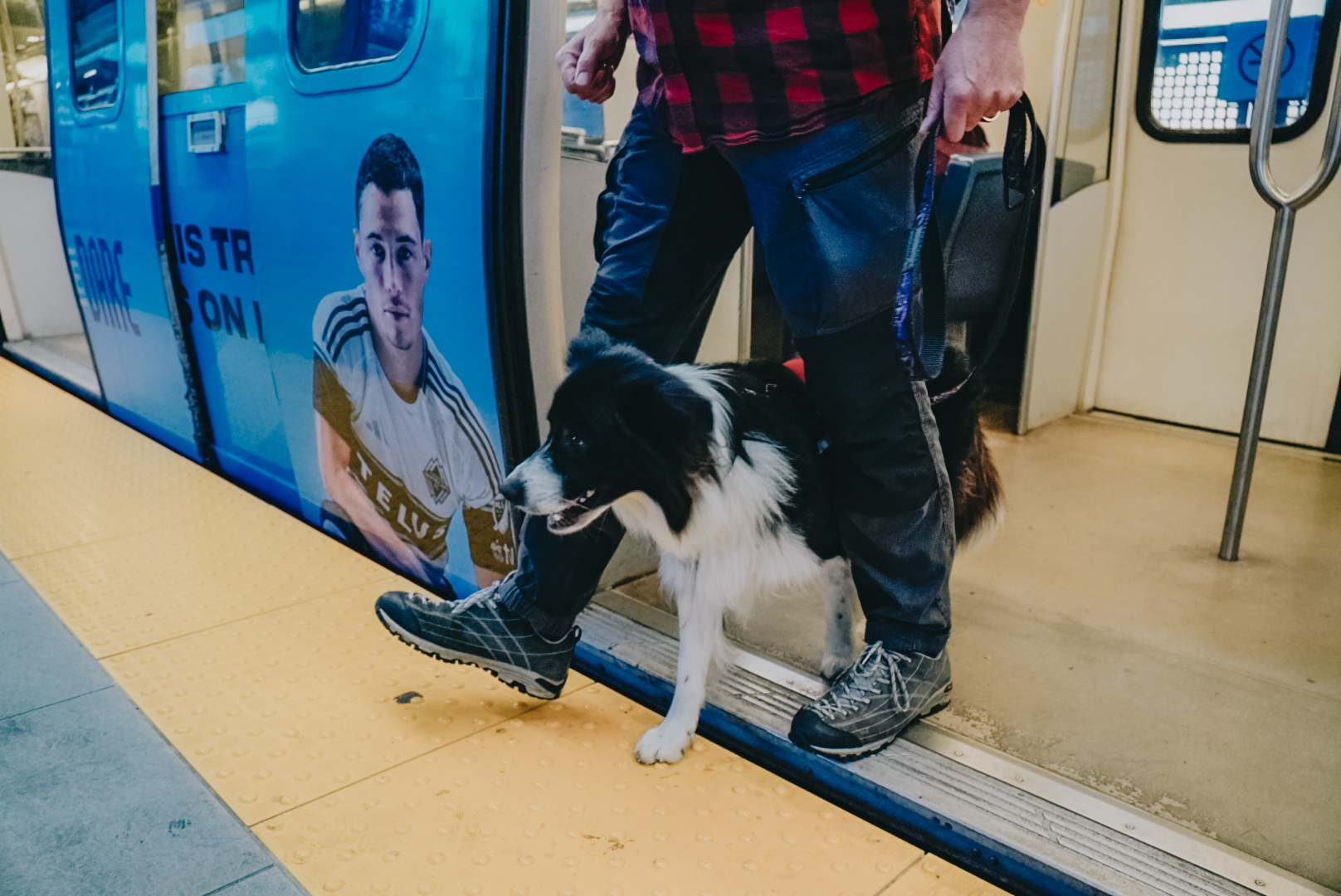
So how did it come to mean "to teach"?
Well, apparently it came to also mean a series or progression - as in a "train of thought".
Apparently horticulturalists used it in the late 14th and early 15th century to refer to the way they encouraged the growth of branches in a specific direction or shape. It came to mean "draw out and manipulate in order to bring to a desired form", according to Etymology Online.
Ah. Now it's beginning to make sense.
"Train" began to mean, "aim toward a target", as in "train your sights on the bullseye". It was no longer just dragging, but moving something from one point to another - aiming at a specific goal.
Let's compare that with the word "teach".
"Teach" comes from Old English taecan - a word meaning to show or demonstrate. It didn't really mean "teach" the way we use it today. The word for instruction, laren, spawned words like "learn" and "lore".
"Training" seems to be more active on behalf of the instructor - making a plant grow into a certain shape, making a railroad car go the way we want it to go.
"Teaching" is more passive - we show the pupil the way to do something, rather than making them do it.
And yet, I don't believe in forcing a dog to grow into a specific shape.
If someone wants me to turn their husky into a couch potato or their fox hound into an obedience champion, I'm likely to send them on their way. I want to help dogs be their best selves - I'm not interested in forcing them to be something they are not.
There are some trainers who delight in showing off their training skills. When you can take clay as raw as a pug or a bloodhound and turn it into a brachycephalic athlete or a flawlessly obedient hound dog, it shows just how good of a trainer you are.
It's like an artist saying, "see? I took this rock and it has become a statue of godly proportions."
We can train a dog. We can make it do things it never would have done naturally. This can be wonderful and very satisfying.
It took Amelia nearly a year to teach her boxer Doug how to use the foot pedal on a trash can, but he managed it!
But at Wag the Dog, we draw the line wherever the dog chooses to draw the line.
Doug was challenging to train but he was a willing and enthusiastic participant. He just needed a lot of time - he was a slow learner and required a lot of processing time. If Doug had said, "No, this isn't fun for me. I don't like this," Amelia would have turned to something else instead.
There are some things we have to teach dogs that they don't like much - how to slow down for humans on walks, for example, or how to leave the steak on the kitchen counter alone. These aren't options, we have to explain. This is how the world works.
But even then, I think of it more as teaching than training. I don't like putting dogs through drills, or aiming at a specific goal. I want to help the dog understand. I want to show the dog how to get what they want. I want the dog to be an active learner.
I'm not out to control their behavior. I'm not here to show how powerful I am, how excellent I am at hijacking a dog's body and senses.
But sometimes - especially when I watch dog sports competitions - I wonder whether the handler is in it for the dog... or for the prize.
Look at that poor little dog. He doesn't know that he's at Crufts. He doesn't understand that this is his chance for a prize. He's scared silly and he has no interest in that agility equipment. That couldn't have happened overnight. He did agility because his owner wanted him to and she motivated him to do it - but when it came down to the big moment, he just wanted to go home.
Dog athletes are a little like child athletes - sometimes they compete because they want to be doing this. Sometimes they are there because their Mom wants them to compete.
Here's another example of training with a much happier competitor:
This fella is pretty happy. He isn't scared of the crowd and seems quite willing to do what his guardian is asking of him. But he's so clearly doing it for her.
I know it makes you happy, Mom, so sure, I'll go through these weave poles for you!
If you asked this basset what he'd rather be doing, he'd say, I already told you. I want to roll around and get belly rubs and maybe check out all these nice people. They could have treats!
Now, maybe he resisted at some point in the past and his owner motivated him over it. Maybe he has always been okay with doing it, even if it wasn't his first choice.
Then there's this little dog:
Now here is a little pug who is clearly loving the agility. Not only does she hop over jumps and roar up ramps without needing encouragement, she's even a little over-eager at times. She's having a blast!
This seems like more of a case of being taught than trained. No one is dragging this little one anywhere. She's her own little engine. I don't think she's out to compete. I think she's just having fun. And that's fine.
Now, here is the ultimate - the ideal dog agility competitor:
I love that moment when she finally takes her eye off of her tug toy and notices the agility course.
OH, she seems to be thinking. OH!
Suddenly the tug is forgotten. She is completely and utterly focused on that course, and she rocks it.
Of course she does, you might think, she's a border collie.
But that's the thing, right? Of all the breeds, border collies are most likely to rock an agility course. They are built for speed, accuracy, and precision. They are agility.
Most border collies don't need to be driven over an agility course. They aren't the train. They're the locomotive. You're just the engineer, and you're lucky if your locomotive has brakes.
If you have a dog like Cookie, and you want to have fun together, agility looks like a great way to do it. But that basset and that papillon look like there are other things they would be doing, if someone offered them a choice. Give that basset a choice between tummy rubs on the couch and agility, I think he'd pick the couch. Give that papillon a choice between that agility course and literally anywhere else, and I think I know what would happen.
If you want anything different, you need to train.
But I've lost interest in training. If a bouncy little pug says she wants to leap over things, I'll be hauling out the agility equipment and teaching her happily.
But if I have to train - really train - a dog to do something? I start wondering if maybe we should be teaching something else.
Because I don't think I have the right to railroad a dog into doing something they'd really rather not do.


We work on land which was taken from the nations who had lived here for thousands of years. They are still here and they are still waiting patiently for us to stop being jerks about it.
© 2024 Copyright Wag The Dog Training
All Rights Reserved



We work on land which was taken from the nations who had lived here for thousands of years. They are still here and they are still waiting patiently for us to stop being jerks about it.
© 2024 Copyright Wag The Dog Training
All Rights Reserved