


About Us
Since 2011, we’ve combined formal education in psychology, veterinary care, and canine cognition to provide exceptional dog training.
Dedicated to the humane and ethical treatment of our best friends, we rely on the latest research, while ensuring that our work is rooted in 15,000 years of human-dog connection.
Dogs and humans have evolved together for 20,000 years. They have found food for us, and protected our families and livestock. They have gone to war with us and acted as gentle playmates for our children. They have laid down their lives to save us.
Our lifestyles have changed a lot in the last century, but our need for dogs hasn't. A dog and their owner, when reunited, sync their heart rates within minutes. Just owning a dog decreases heart attack mortality by 30%.
We are designed to live with dogs, but we need to learn how to incorporate them into our chaotic modern lives.
We're here to help you and your dog learn how to live together in these modern times.
Forget sit and stay!
At Wag The Dog we can teach dogs to:
Find our phones and keys when we lose them.
Find our children when we lose them!
Put recycling in the blue bin.
Fetch their own leash for walks.
Close doors and cupboards.
Imitate our actions.
Communicate their needs and thoughts clearly.
Recognize fragile people like children and the elderly and be cautious around them.
Accompany us on outings and errands.
Trust us to return home to them when we go out.
Understand simple phrases and two step instructions.
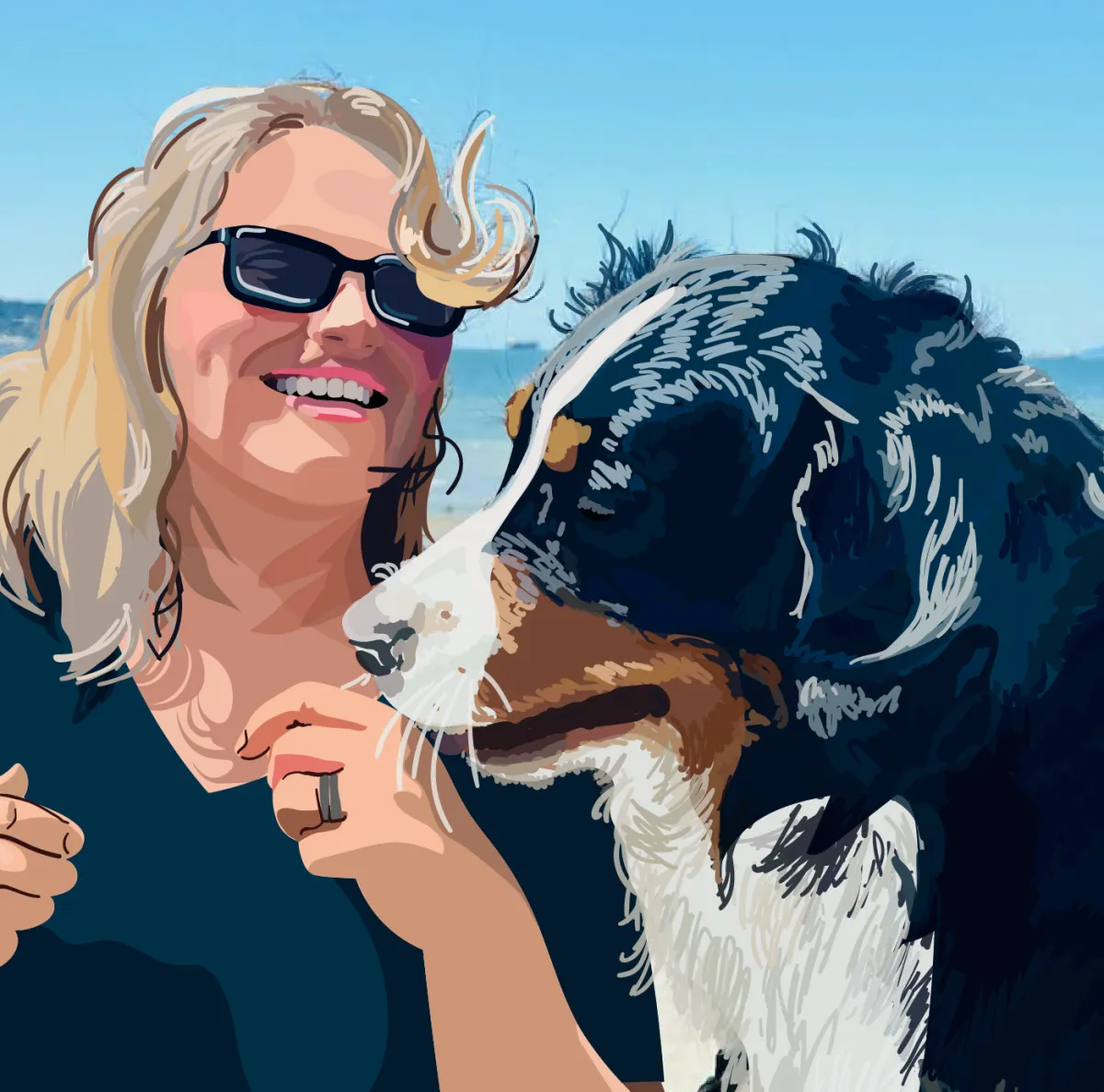
Carol Millman (she/her)
- Lower Mainland
B.Sc, Psychology, Veterinary Technologist, Certified Pet Dog Trainer - Knowledge Assessed (2022), Certified Trick Dog Instructor
Carol lives in Port Coquitlam and works in the Lower Mainland. Her autism gives her a unique perspective which she brings to her work with both dogs and people. Her time working as a veterinary nurse culminated in becoming the Director of Medical Services at a holistic veterinary clinic.
In 2008, Carol was hired as an apprentice Advanced Instructor at Pacific Assistance Dogs Society (PADS). She trained and placed wheelchair assistance dogs, hearing dogs for the Deaf, and facility therapy dogs. She also ran puppy classes and assisted in the daily care of the dogs in training.
Carol is now the Director of Training at Heeling Assistants Canada, and still helps pet dogs through Wag The Dog.
- Currently On Leave -
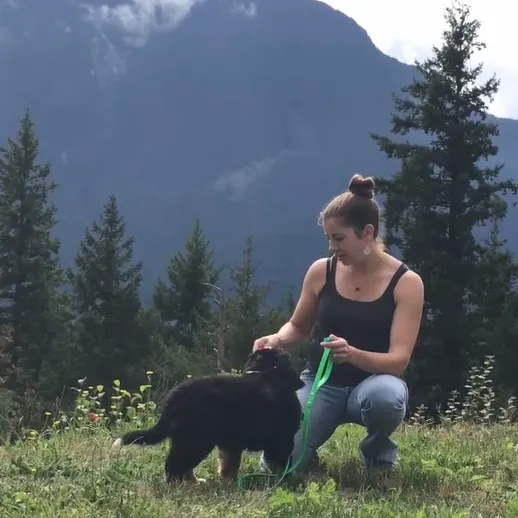
Amelia Kellum (she/her) - Fraser Valley
B.Sc Canine Studies, Certified Professional Dog Trainer Knowledge/Skills Assessed (2022), Certified Trick Dog Instructor.
Amelia is a certified professional dog trainer with nearly two decades of experience training dogs - including hunting, acting, and assistance dogs such as hearing, therapy, guide, and mobility dogs.
Amelia has learned directly from Bonnie Bergin, pioneer of the disability assistance dog, and is also a graduate of the Ben Kersen and the Wonderdogs professional trainer's program.
She apprenticed at PADS as an instructor and has been training independently since 2010. She now lives in Hope with her family.
What can you achieve
with our help?
Come check out our blog!
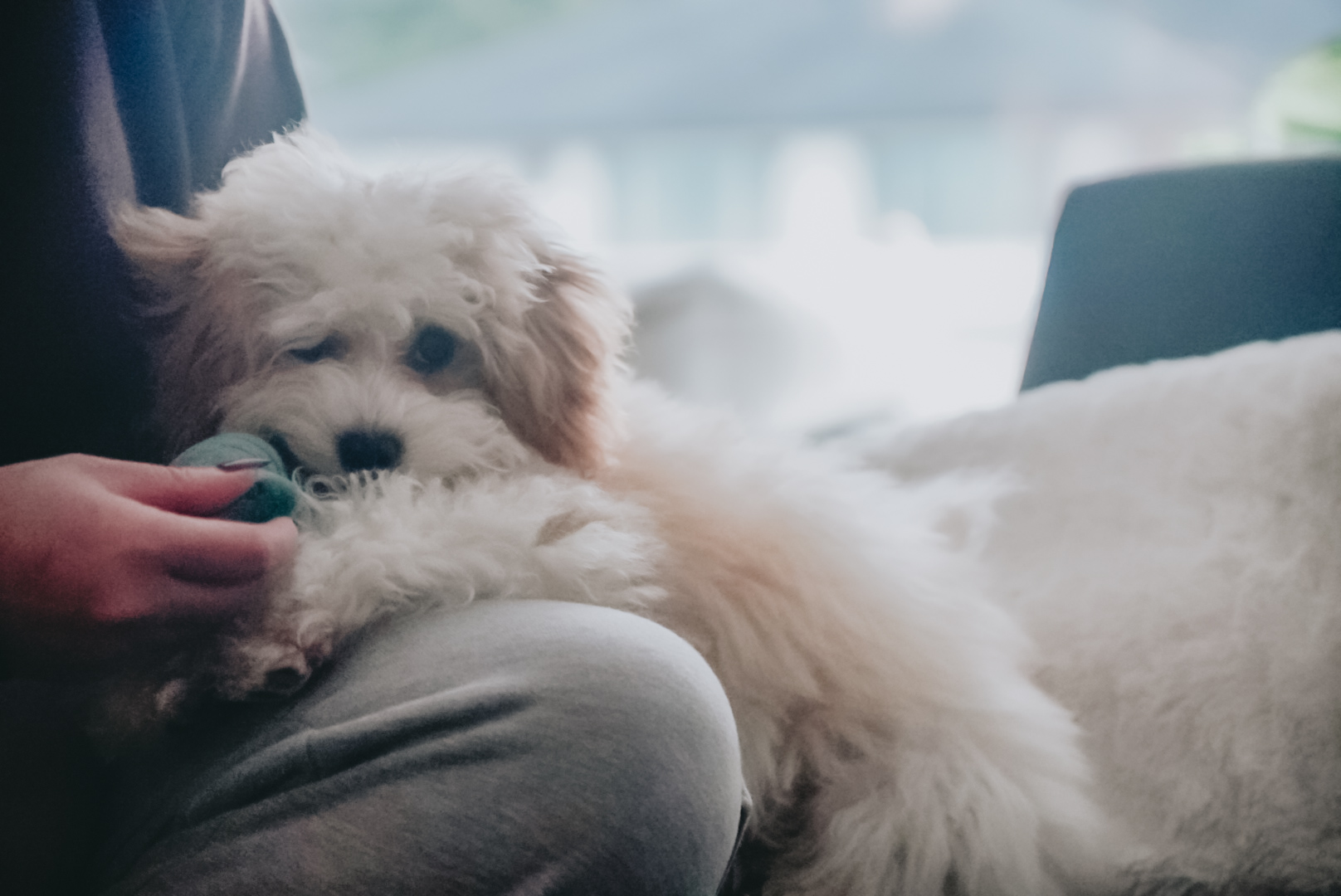
It's a puppy, not a puppet!
It's A Puppy - Not A Puppet!
I'm convinced that many of the people who get puppies thought they were getting a puppet.
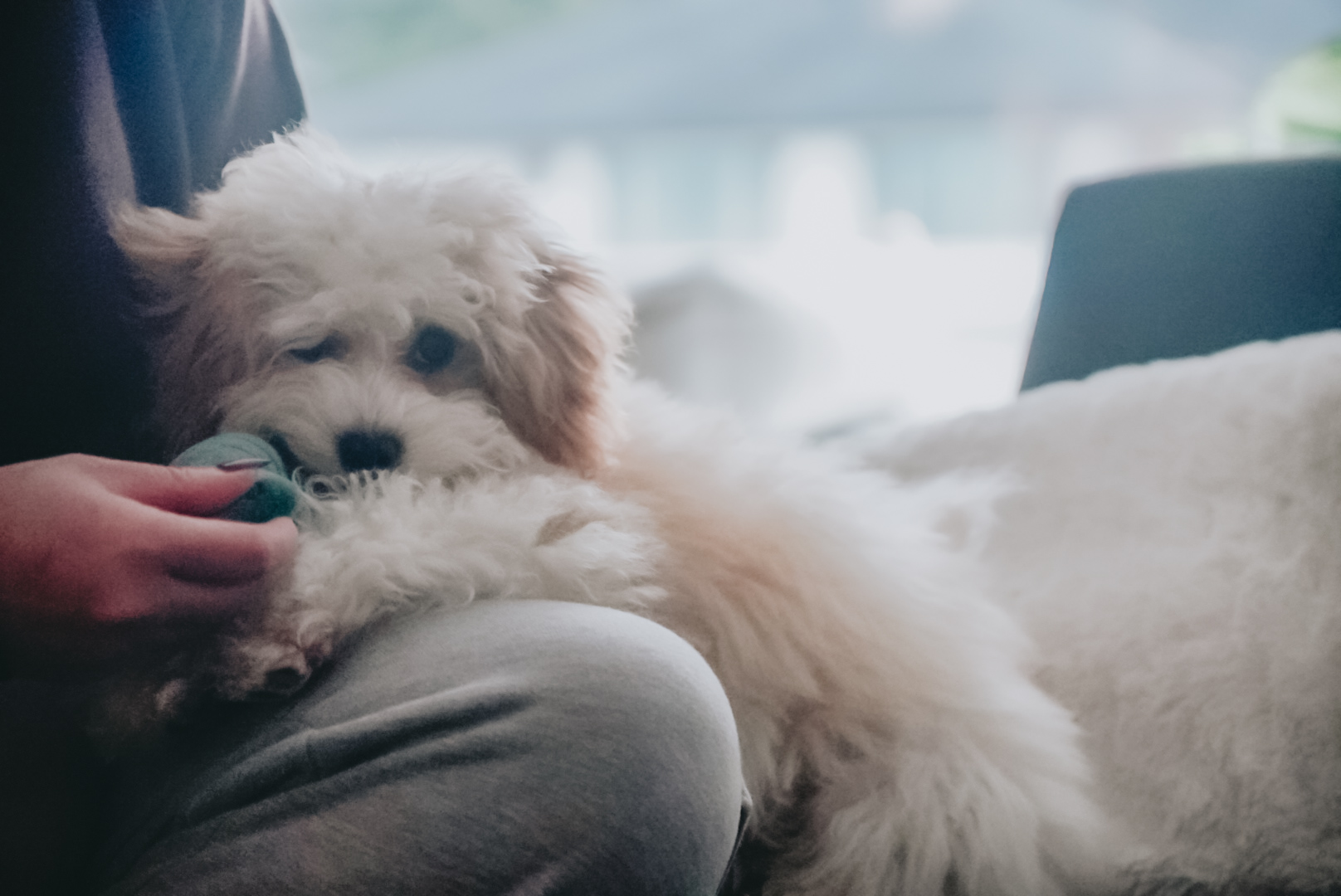
It's an understandable confusion. Both can be cute, lovable, and both can come with strings attached.
There are a few key differences, though. Puppets, unlike puppies, can be purchased on Amazon and rarely mess up your rugs.
A puppy, unlike a puppet, is a living sentient being that thinks for itself. Unlike puppets, puppies resent being physically steered and maneuvered, just as you would if someone did that to you.
Yet that is what the vast majority of (otherwise loving and affectionate) dog guardians do. They use the leash to steer the puppy to their side on walks, to steer the puppy in and out of the house, and to steer the puppy away from gross things on the sidewalk.
Why? Are they controlling madmen? Of course not. They're just trying to keep puppy safe and "teach" puppy how to walk on a leash.
The problem is that the puppy learns all the wrong lessons.
When the leash is used to puppeteer the dog from one place to another, the dog learns to go where they are steered. This is true. At first puppies will balk and refuse to move when their leash is tightened. Dogs are agreeable creatures though and many come to be philosophical about the human's need to control their exact physical location.
Many others decide that the leash is a matter of might makes right, and use the leash to steer their human towards trees, fire hydrants and other key points of interest.
Even for the dogs who learn to simply follow the guidance of the leash from one place to another, they are not learning where you would like them to be - only to go where they are steered.
Neither type of dog learns a key skill that we teach to our children when they are tots - to pay attention to your walking companions and match the pace of the slowest member to keep the group together.
Dogs naturally will do this if they are allowed to develop the skill. Puppies raised in rural areas off of a leash will follow the farmer around the fields, always keeping track of where their human is even as they romp about chasing gophers and flushing birds.
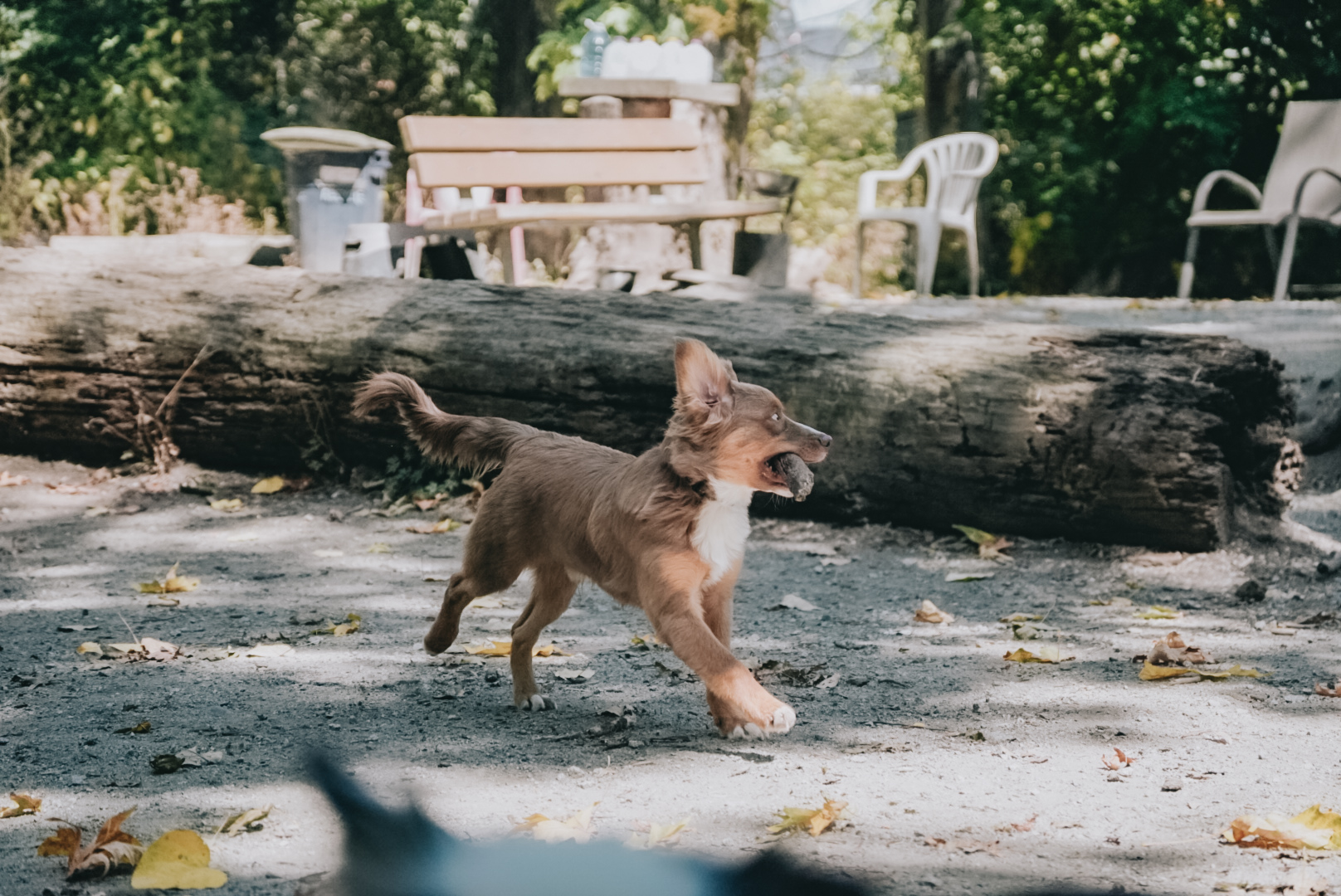
Pups who are used to going on off-leash trails with their human circle back constantly to track their human's movements.
But when constantly on a leash and steered by that leash, the puppy never has to exert any brain energy into paying attention to where their group members are. They simply go where they are steered, and devote their brain power to sniffing, scanning the horizon for birds and dogs and people, and otherwise enjoying their walk as much as they can, given that they can only walk where they are directed.
This is the classic give-a-man-a-fish vs teach-a-man-to-fish problem. It is easier to just steer your puppy into place. Teaching a puppy to pay attention to you, to follow you where you go, to stop when you ask them to and go when you give permission... all of that takes a lot of patience and hard work.
But when we put in that time and effort, we are repaid with a dog who watches where we are on walks, who walks with us willingly and consciously instead of treating us like a ball and chain, and who pays attention to and manages their leash. They will even untangle their own legs from the leash!
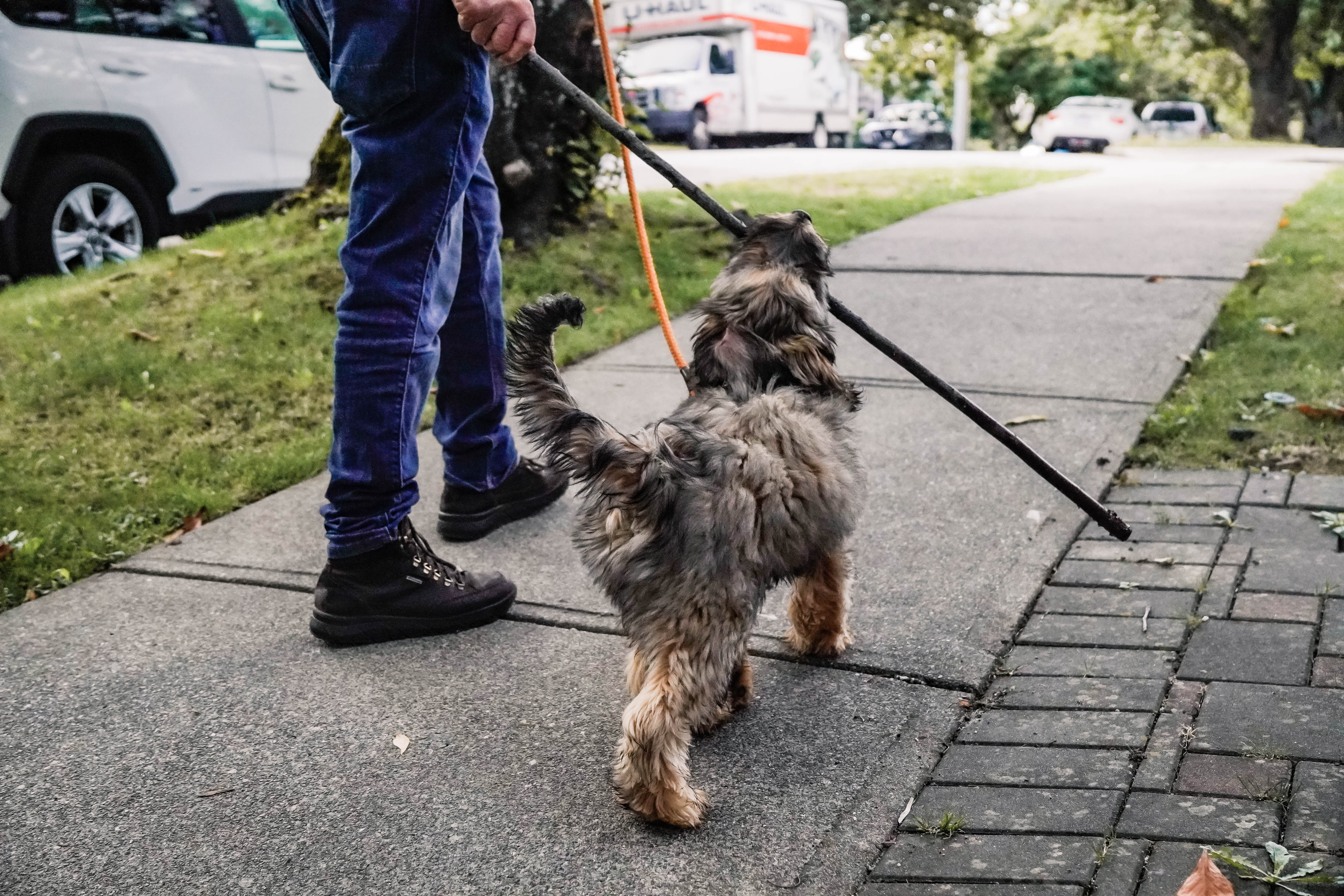
It is an investment in puppyhood that can result in over a decade of easy walks.
Whether you want to invest in that future is entirely up to you, but I highly recommend considering it.

We work on land which was taken from the nations who had lived here for thousands of years. They are still here and they are still waiting patiently for us to stop being jerks about it.
© 2024 Copyright Wag The Dog Training
All Rights Reserved



We work on land which was taken from the nations who had lived here for thousands of years. They are still here and they are still waiting patiently for us to stop being jerks about it.
© 2024 Copyright Wag The Dog Training
All Rights Reserved